The Jewish Community of Amazonas: A History of Faith and Perseverance
The Jewish presence in the Amazon region spans a history of over 200 years, an anniversary celebrated in 2010. The initial exodus began with the expulsion of Jews from the Iberian Peninsula during the Inquisition in the late 15th century, leading many to seek refuge in various parts of the world.
The first Jews to arrive in the Amazon were predominantly from Morocco, a refuge that was familiar to them due to geographical proximity and language (Spanish and, at times, Portuguese). Seeking to escape economic hardship, political instability, and disease in Morocco, about a thousand Moroccan Jewish families migrated to the Amazon between 1810 and 1910. Attracted by the wealth of the rubber boom (“the black gold”) and the new religious tolerance laws established by D. João VI, they settled along the Amazon River, from Pará up to Iquitos, Peru, searching for “Eretz Amazonia,” the new Promised Land.
Consolidation and Community Structure
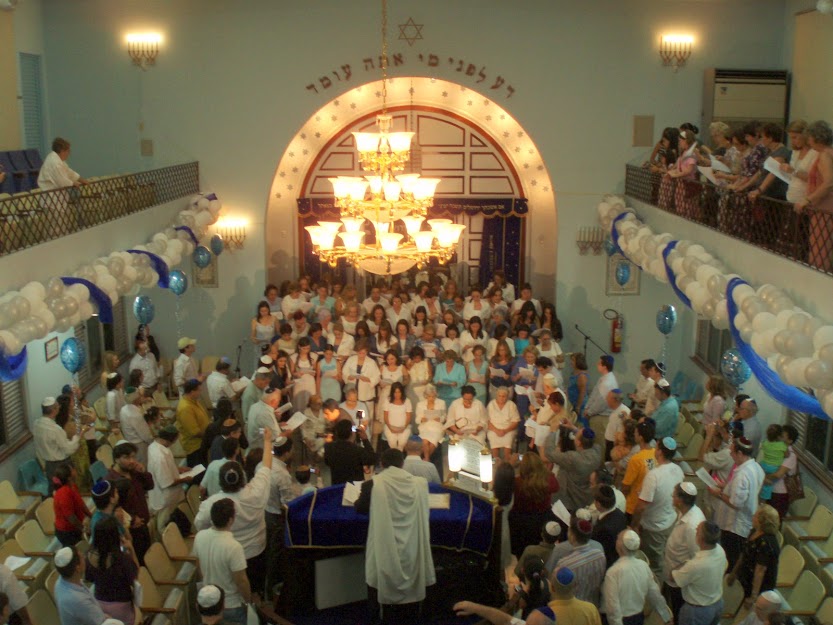
The migratory movement was notable for the steadfast maintenance of Sephardic customs, preserving the rituals and traditions brought from Morocco. The history of community organization in Manaus is marked by the merging of its institutions. The first local synagogue, Beit Yaacov, was already active in 1925, followed by the founding of the Rabi Meyr Synagogue in 1937. Both were unified into a single, imposing Temple in January 1962, which stands today as the Beit Yaacov – Rebi Meyr Synagogue, the primary religious meeting place and the pride of the Jewish people of Amazonas.
The Comitê Israelita do Amazonas (CIAM) — Israelite Committee of Amazonas, founded on June 15, 1929, is the central body that represents and keeps Judaism alive and active in the state. According to CIAM Vice-President Anne Gimol Benzecry Benchimol, the Committee promotes gatherings, cultural activities, and full religious services, including Shabbat services, all major Jewish holidays (Yom Tov), and weekly Shacharit on Thursdays.
CIAM oversees the following community institutions:
Synagogue: Beit Yaacov/Rabi Meyr
Mikvah: The Beit Yaacov/Rabi Meyr Synagogue has a mikvah in a comfortable and climatized environment
Choir: Coral Chaim Bialik
Senior Women’s Group: Meretz
Youth Group: Habonim Dror
Education: Jewish Supplementary School – Jacob Azulay
The community structure also encompasses other key, independently managed entities that serve vital roles:
The Hebraica Social Club: This facility functions as the community’s central social and recreational hub, equipped with amenities such as a sports court, swimming pool, and a large events hall. It regularly hosts community-wide parties, communal dinners, and other festive events.
Cemetery: The community maintains an active Jewish Cemetery in Manaus for ongoing use. Additionally, the more than 20 historic Jewish cemeteries scattered throughout the Amazon interior (such as those in Parintins and Maués) are actively being registered as historical landmarks to ensure the preservation of these two centuries of history.
Contribution and Legacy
Jewish immigrants, characterized as hardworking, entrepreneurial, and adventurous, played a significant role in the development of the Amazon. Their businesses spurred the growth of riverside towns and capital cities, where they contributed through commerce, hospitality, pharmacies, and jewelry stores, among other activities. They brought with them valuable knowledge and cultural heritage, contributing to education and offering job opportunities and intellectual growth to local residents. The current Jewish community in Amazonas comprises approximately 850 Jews in the capital, Manaus, who continue to preserve and celebrate the traditions of their ancestors. These historic sites and the vibrant community stand as great testimony to the perseverance and devotion to the Amazon.
The Jewish Community of Amazonas: A History of Faith and Perseverance
The Jewish presence in the Amazon region spans a history of over 200 years, an anniversary celebrated in 2010. The initial exodus began with the expulsion of Jews from the Iberian Peninsula during the Inquisition in the late 15th century, leading many to seek refuge in various parts of the world.
The first Jews to arrive in the Amazon were predominantly from Morocco, a refuge that was familiar to them due to geographical proximity and language (Spanish and, at times, Portuguese). Seeking to escape economic hardship, political instability, and disease in Morocco, about a thousand Moroccan Jewish families migrated to the Amazon between 1810 and 1910. Attracted by the wealth of the rubber boom (“the black gold”) and the new religious tolerance laws established by D. João VI, they settled along the Amazon River, from Pará up to Iquitos, Peru, searching for “Eretz Amazonia,” the new Promised Land.
Consolidation and Community Structure
The migratory movement was characterized by a steadfast commitment to Sephardic customs, preserving the rituals and traditions brought from Morocco. The history of communal organization in Manaus is marked by the merging of its institutions. The first local synagogue, Beit Yaacov, was already active by 1925, followed by the founding of the Rabi Meyr Synagogue in 1937. Both were unified in January 1962, becoming what is now the Beit Yaacov/Rabi Meyr Synagogue—the primary center for religious life and the pride of Amazonian Jews.
The Comitê Israelita do Amazonas (CIAM) — Israelite Committee of Amazonas, founded on June 15, 1929, is the central body that represents and keeps Judaism alive and active in the state. According to CIAM Vice-President Anne Gimol Benzecry Benchimol, the Committee promotes gatherings, cultural activities, and full religious services, including Shabbat services, all major Jewish holidays (Yom Tov), and weekly Shacharit on Thursdays.
CIAM oversees the following community institutions:
Synagogue: Beit Yaacov/Rabi Meyr
Mikveh: Congregation Beit Yaacov/Rabi Meyr offers a Mikveh in a comfortable, climate-controlled environment.
Choir: Coral Chaim Bialik
Senior Women’s Group: Meretz
Youth Group: Habonim Dror
Education: Jewish Supplementary School – Jacob Azulay
The community structure also encompasses other key, independently managed entities that serve vital roles:
The Hebraica Social Club: This facility functions as the community’s central social and recreational hub, equipped with amenities such as a sports court, swimming pool, and a large events hall. It regularly hosts community-wide parties, communal dinners, and other festive events.
Cemetery: The community maintains an active Jewish Cemetery in Manaus for ongoing use. Additionally, the more than 20 historic Jewish cemeteries scattered throughout the Amazon interior (such as those in Parintins and Maués) are actively being registered as historical landmarks to ensure the preservation of these two centuries of history.
Contribution and Legacy
Essa é uma passagem histórica belíssima e muito significativa. Para que a tradução soe natural para um nativo, fiz pequenos ajustes de estilo: no inglês, usei termos que evocam o legado histórico; no espanhol, foquei na fluidez narrativa; e no hebraico, utilizei um vocabulário que respeita a dignidade da história comunitária. Aqui estão as versões: Inglês (English) "Jewish immigrants, known as hardworking entrepreneurs, played a significant role in the development of the Amazon. Their businesses fueled the growth of riverside towns and capitals, where they contributed through trade, hospitality, pharmacies, and jewelry stores, among other activities. They brought with them valuable knowledge and a rich cultural heritage, contributing to education and providing employment opportunities and intellectual growth for local residents. Today’s Jewish community in Amazonas consists of approximately 850 Jews in the capital, Manaus, who continue to preserve and celebrate their ancestors' traditions. These historic sites and this vibrant community stand as a powerful testament to their perseverance and devotion to the Amazon.